For anyone stepping into fishing, hunting, or any water-based outdoor activity for the first time, choosing the right gear can feel overwhelming. Among the many options on the market, neoprene waders consistently rise to the top of beginner recommendations — and for very practical reasons. They offer a combination of warmth, durability, and accessible pricing that few alternatives can match at the entry level.
Understanding why neoprene waders are so frequently recommended for beginners requires looking at what beginners actually need: reliable protection from cold water and rough terrain, a forgiving learning curve, and gear that does not require a major financial commitment before the hobby is fully explored. Neoprene waders check all of these boxes in a way that makes them a genuinely smart starting point for new outdoor enthusiasts.
Neoprene is a synthetic rubber that has been used in wetsuits, gloves, and protective clothing for decades. Its physical structure traps a thin layer of water next to the body, which quickly warms to body temperature and acts as natural insulation. This mechanism is straightforward, effective, and requires no special maintenance protocol to activate — it simply works from the moment the wearer enters the water.
For beginners who are still learning how to move through streams, wade in currents, or stand in cold shallows for extended periods, this passive warmth is enormously valuable. There is no need to layer complex base systems or understand moisture-wicking science on day one. The neoprene waders do the thermal work automatically.
Beyond warmth, neoprene has a naturally dense texture that resists punctures, abrasion, and minor snags from rocks, branches, and debris. This physical toughness means that a beginner who stumbles, brushes against a rocky bank, or kneels on a riverbed is far less likely to damage their gear compared to thinner, more fragile wader materials.
Neoprene waders are typically available in several thickness levels, most commonly measured in millimeters. A 3mm or 4mm thickness is widely regarded as the most practical starting point for general use across a range of seasonal conditions. This thickness provides meaningful insulation without making the garment so stiff that movement becomes uncomfortable or awkward.
Beginners benefit from this middle-ground thickness because it works across spring, autumn, and mild winter conditions without requiring the wearer to own multiple pairs for different seasons. A single pair of well-chosen neoprene waders can cover a broad range of outings, which is exactly the kind of versatility that someone early in their hobby needs.
Thicker neoprene waders, such as 5mm options, are generally reserved for experienced users operating in very cold or extreme conditions where they understand the trade-off between insulation and mobility. For most beginners, the 4mm range strikes the right balance and is the most frequently stocked option in entry-level product lines.
One of the most significant reasons neoprene waders are recommended for beginners is their cost structure relative to the protection they offer. Compared to breathable waders made from advanced laminate fabrics, neoprene waders deliver strong thermal and physical protection at a substantially lower price per unit. This gap matters enormously when someone is still unsure how frequently they will pursue the activity.
Purchasing high-end breathable waders as a first-time buyer carries real financial risk. If the hobby does not stick, or if the buyer's preferences shift over time, that investment becomes difficult to justify. Neoprene waders allow a beginner to get into the water with confidence, test their interest, and make a more informed upgrade decision later — without feeling locked into a costly first purchase.
The affordability of neoprene waders also means that beginners can allocate remaining budget toward other essential gear such as boots, rods, licenses, or safety equipment. A balanced gear setup serves a new outdoor enthusiast far better than a single expensive item surrounded by inadequate supporting equipment.
Affordability alone would be insufficient if neoprene waders wore out quickly. What makes them a genuinely good value proposition is that their durability is proportional to their cost in a favorable way. Neoprene resists common forms of beginner wear: unexpected contact with sharp surfaces, repeated entry and exit over rough terrain, and the general clumsiness that accompanies a learning phase in any physical activity.
This durability extends the functional lifespan of the product well beyond what comparable low-cost breathable waders might offer. A beginner can expect their neoprene waders to remain serviceable across multiple seasons of moderate use, making the initial investment stretch further in real terms.
The repair profile of neoprene is also beginner-friendly. Minor tears or punctures can be patched with standard neoprene cement, which is inexpensive and easy to apply. This means that small accidents do not automatically result in replacement costs, which is a practical advantage when someone is still building their skills and making occasional mistakes.
Cold water exposure is one of the most serious physical risks in any wading activity. Water draws heat away from the body roughly twenty-five times faster than air at the same temperature, which means that even a relatively mild water temperature can cause significant discomfort or risk if the wearer is unprotected. Neoprene waders address this risk directly through their insulating structure.
In practical terms, neoprene waders allow beginners to stay comfortable in water temperatures that would quickly become unpleasant or unsafe in lighter gear. This comfort directly improves focus, patience, and safety — all of which are especially important for someone who is still learning the environment and may not yet have developed the instincts to recognize early warning signs of cold stress.
The protection that neoprene waders provide is not just about comfort. It is also about extending the window of productive activity. A beginner who grows cold quickly will shorten their outing, lose concentration, and develop a negative association with the activity. Proper thermal protection through quality neoprene waders helps new anglers and waders enjoy longer, more rewarding sessions.
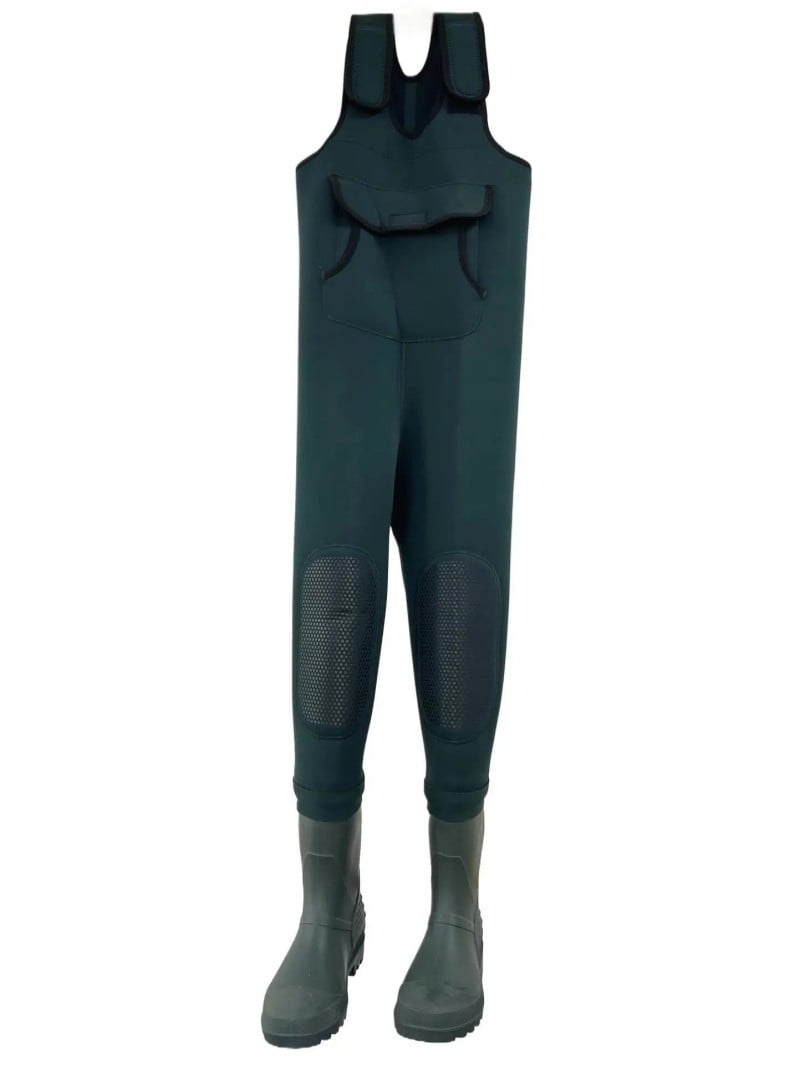
Many neoprene waders are sold as complete chest-high systems that include integrated PVC or rubber boots. This all-in-one configuration is particularly valuable for beginners because it eliminates the need to research, purchase, and fit separate wading boots at the start. The integration also ensures that there are no gaps in coverage between the wader leg and the boot top — a common weak point in multi-piece systems.
Chest-height neoprene waders provide coverage from foot to chest, which is the most comprehensive protection available. Beginners who are still learning to read water depth and current behavior benefit significantly from this full-coverage approach. An unexpected step into deeper water or a sudden current change is far less alarming when the wearer knows their torso is protected.
The suspender-style design common in neoprene waders also distributes weight and pressure evenly across the shoulders and body, reducing fatigue during extended wading sessions. For a beginner spending several hours on the water, this ergonomic benefit contributes meaningfully to the overall experience.
Neoprene waders are straightforward to put on and take off compared to some technically complex alternatives. Their construction does not involve elaborate sealing systems, complex zipper architectures, or sensitive membrane layers that require special handling. For a beginner who is focused on learning the primary activity rather than managing gear complexity, this simplicity is a genuine asset.
Cleaning and storing neoprene waders is equally uncomplicated. Rinsing with fresh water after each use to remove sediment, salt, or debris is sufficient for routine maintenance. The material does not require special soaps, conditioners, or drying protocols to maintain its properties, which lowers the total time and knowledge investment required to keep the gear in good condition.
For beginners who are already absorbing a large amount of new information about their chosen activity, the low-maintenance nature of neoprene waders reduces cognitive load and lets them stay focused on skill development rather than gear management.
There is a dimension of beginner gear selection that is rarely discussed but genuinely matters: psychological confidence. When a person feels physically protected, warm, and covered by reliable equipment, they move more confidently, take more measured risks, and engage more fully with the learning process. Neoprene waders contribute to this mental state in a direct way.
The snug, supportive fit of neoprene around the legs and lower body provides a proprioceptive feedback that many beginners find reassuring when navigating uneven river bottoms or unfamiliar terrain. Compared to loose-fitting alternatives, this closeness to the body translates into more stable footing and more attentive movement.
This combination of physical and psychological benefit is part of why experienced mentors, fishing guides, and outdoor educators so consistently point beginners toward neoprene waders as their first serious gear investment. The product delivers on its promise in a way that directly supports the beginner's journey.
Neoprene waders are optimized for cold to moderate water temperatures and can feel overly warm in summer conditions or warm-water environments. For beginners primarily fishing in spring, autumn, or cold-water settings, they are an excellent choice. Those planning to wade in warm summer rivers may find lighter breathable options more comfortable for that specific seasonal context.
With proper rinsing after each use and correct storage away from direct sunlight, neoprene waders can remain functional for several seasons of moderate use. The neoprene material is naturally resilient, and minor damage can be repaired easily with neoprene adhesive. The lifespan depends on frequency of use and how well the gear is maintained between outings.
A 3.5mm to 4mm thickness is the most commonly recommended starting point for beginners because it balances thermal insulation with freedom of movement. This range works well across a broad variety of conditions without being excessively heavy or restrictive. As a beginner gains experience and identifies their most frequent use conditions, they can refine their choice in future purchases.
Many neoprene waders designed for beginners come with integrated PVC or rubber boots, which simplifies the overall setup significantly. These all-in-one configurations eliminate fitting complexity and ensure consistent coverage. For beginners, integrated boot options are often the more practical choice as they reduce the number of separate gear decisions required before getting on the water.

 EN
EN