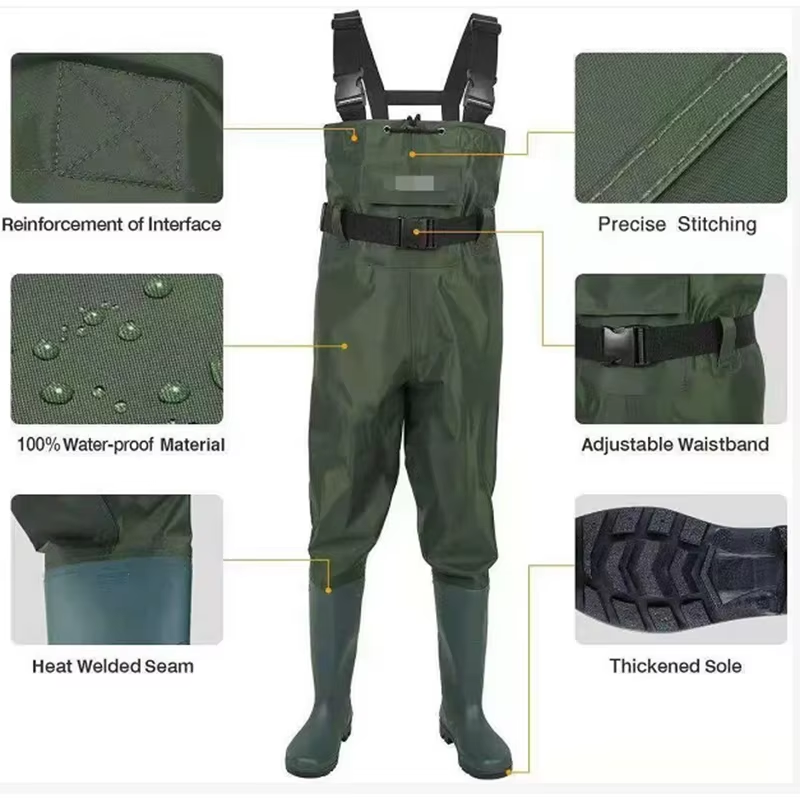
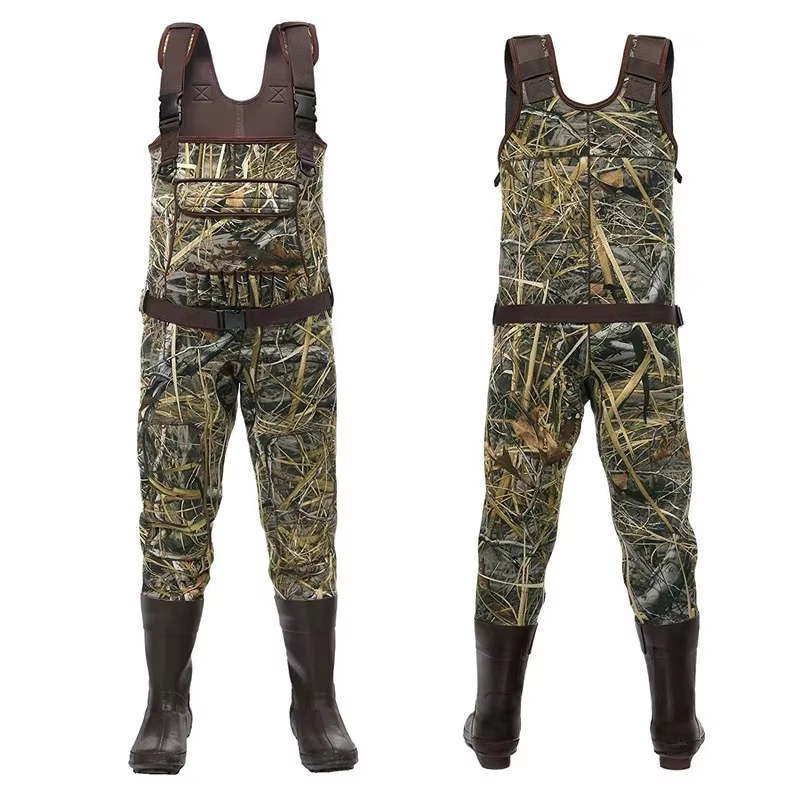
When anglers face the jagged, unforgiving terrain of rocky streams, the choice of wading gear becomes far more than a comfort decision — it becomes a matter of durability, safety, and confidence underfoot. neoprene waders have long held a reputation for standing up to abrasive conditions where breathable alternatives simply cannot match their structural resilience. Understanding exactly what makes them more puncture-resistant in rocky environments requires a deeper look into the material science, construction method, and real-world performance of neoprene compared to the lightweight fabrics found in breathable options.
Rocky streams present a unique combination of hazards — sharp submerged stones, broken slate edges, barnacle-like mineral deposits, and fast-moving water that can force an angler's legs against abrasive surfaces without warning. In these conditions, neoprene waders consistently outperform breathable waders when it comes to resisting punctures, cuts, and structural failure. This article breaks down the specific material and design characteristics that give neoprene waders their superior puncture resistance, and explains why that advantage is especially critical in rocky stream environments.
Neoprene, or polychloroprene, is a synthetic rubber compound with a closed-cell foam structure. This means the material is composed of millions of tiny, sealed air pockets that give it both buoyancy and remarkable physical toughness. When a sharp rock edge contacts the surface of neoprene waders, that cellular matrix distributes the point load across a wider area rather than concentrating stress at a single point. This load distribution is one of the primary reasons neoprene waders resist puncture far more effectively than thin-membrane breathable fabrics.
Breathable waders, by contrast, are typically constructed from laminated membranes — often only a few layers of polyester or nylon bonded to a waterproof-breathable film. While these layers provide waterproofing and moisture management, they lack the thickness and elastic deformation capacity needed to absorb sharp impacts without tearing. A single contact with a pointed stone edge can compromise the membrane integrity, allowing water to enter and rendering the garment ineffective.
Neoprene waders in typical fishing configurations range from 3mm to 5mm in thickness. This seemingly modest measurement represents a substantial physical barrier against mechanical damage. The rubber compound does not crack, shatter, or split under localized stress — it deforms elastically and then returns to its original shape, absorbing the energy of impact without permanent damage.
The thickness of neoprene waders is not just about thermal insulation — it serves as a direct mechanical barrier against sharp objects. A 5mm neoprene panel requires significantly more force to puncture than a 0.1mm to 0.3mm breathable membrane. In rocky stream conditions where an angler may slip and press a leg directly against a submerged boulder or sharp shale fragment, this thickness differential becomes the deciding factor between intact gear and a flooded wader leg.
Furthermore, neoprene waders are often reinforced at high-wear zones such as the knees, seat, and lower legs. These reinforced panels use additional layers of neoprene or abrasion-resistant nylon overlays, creating a composite structure that multiplies the protective benefit in exactly the areas most likely to contact stream-bed obstacles. Breathable waders may include reinforced knees as well, but the underlying membrane remains thin and vulnerable to sharp penetration even in reinforced zones.
The way neoprene waders are assembled contributes significantly to their ability to resist failure in rocky conditions. High-quality neoprene waders use glued and blind-stitched seams, a construction method where the stitching does not pass entirely through the material. This technique preserves the waterproof integrity of each seam while also maintaining the structural continuity of the neoprene panels. When a seam is stressed by contact with a rocky surface, this construction method prevents the thread from acting as a tear initiator.
Breathable waders commonly use taped seams — a strip of waterproof tape applied over a sewn joint. While effective for waterproofing under normal conditions, taped seams are more susceptible to delamination and abrasion when repeatedly dragged across rough stone surfaces. Once the tape begins to lift at a corner or edge, water infiltration becomes inevitable, and the structural integrity of the seam weakens progressively with each rocky encounter.
Neoprene waders also benefit from the fact that the base material is inherently waterproof without requiring a separate membrane layer. This means there is no internal film that can be delaminated by mechanical stress. The waterproof function and the structural function are provided by the same material layer, reducing the number of potential failure points in the construction.
One of the less-discussed but critically important properties of neoprene waders is their elastic recovery behavior. When compressed or deformed by contact with a sharp or angular object, neoprene returns to its original geometry once the load is removed. This elasticity means the material can absorb repeated impacts across a wading session without accumulating damage in the way that a stiffer or thinner material might.
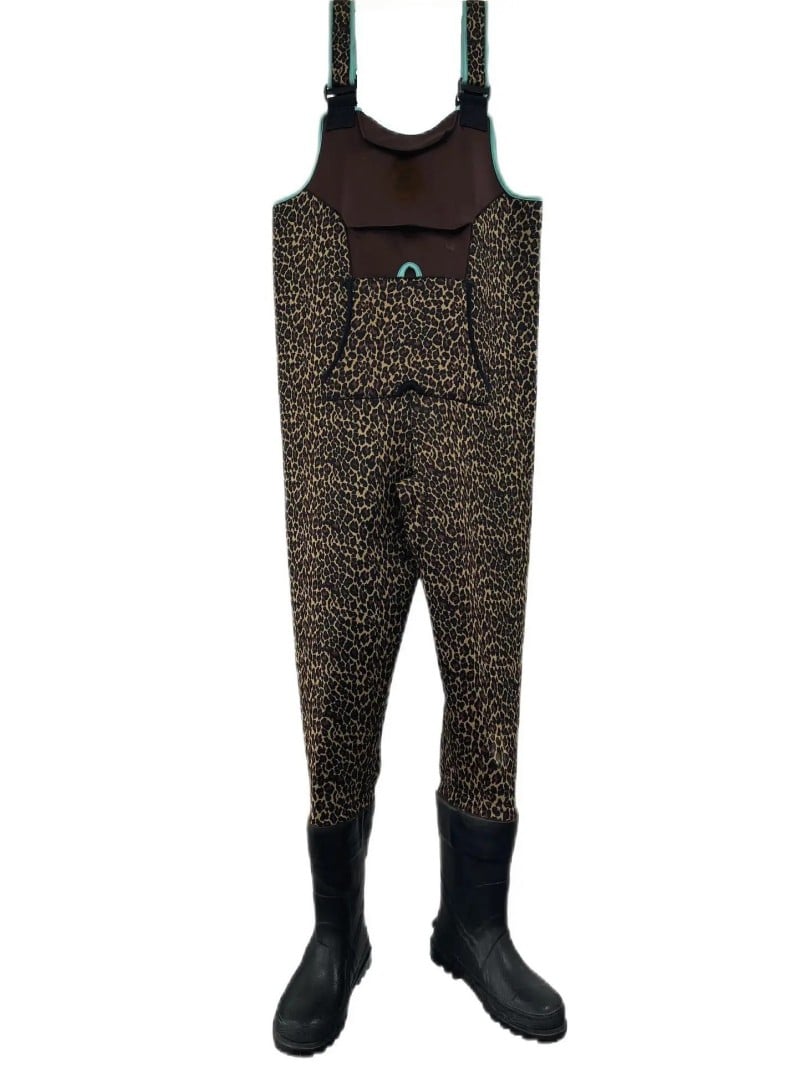
Breathable fabrics are generally less elastic in their response to point-load impacts. A laminated membrane that is pressed hard against a sharp edge may not fully recover its geometry after deformation, leaving a weakened zone that is more susceptible to subsequent puncture. In a rocky stream environment where an angler may make hundreds of steps across irregular terrain in a single session, this cumulative damage risk is highly relevant.
The elasticity of neoprene waders also contributes to comfort and mobility in rocky terrain by allowing the material to flex with the body's movements rather than resisting them. This means the angler can step over obstacles, brace against current, and navigate uneven footing without the wader material working against them — a practical advantage that also reduces stress on the seams and panels.
Rocky streams are not only a puncture hazard — they are also a continuous abrasion environment. Every step involves the lower portions of the wader material sliding or pressing against rough stone. Over a full day of fishing, this cumulative abrasion can degrade breathable membranes visibly, thinning the outer face fabric and eventually compromising the waterproof film underneath. Neoprene waders resist this type of surface wear far more effectively due to the rubber compound's inherent abrasion resistance.
The outer surface of neoprene waders is typically faced with a durable nylon jersey or smooth rubber skin, both of which are designed to resist surface scuffing. This outer layer acts as a sacrificial abrasion shield that protects the core neoprene from wear. Even when the outer facing shows surface marks after contact with rough stone, the structural neoprene beneath remains fully intact and functional.
In practical terms, this means that a pair of neoprene waders used regularly in rocky streams will outlast a breathable alternative many times over in equivalent conditions. The total cost of ownership calculation for anglers who regularly fish technical rocky terrain consistently favors neoprene waders when durability is weighted appropriately in the decision.
Rocky mountain streams and tailwaters are frequently cold, and material behavior changes with temperature. Breathable membranes can become stiffer and more brittle at low temperatures, which increases their susceptibility to puncture from sharp impacts. A membrane that performs reasonably well in moderate conditions may become significantly more vulnerable in cold water environments where the laminate layers harden and lose some of their flexibility.
Neoprene waders actually maintain much of their elastic behavior across a wide temperature range. The rubber compound does not become brittle in cold water in the same way that synthetic film laminates can. This thermal stability means that neoprene waders retain their puncture-resistant properties even in the cold, fast-moving rocky streams where they are most commonly needed.
Additionally, neoprene waders provide substantial thermal insulation as a byproduct of their construction. In cold rocky streams, this insulation reduces physical fatigue and helps maintain the angler's dexterity and balance — both of which are important safety factors when navigating uneven, slippery terrain. Breathable waders require additional layering underneath to achieve equivalent warmth, which adds bulk and can reduce the quality of fit and mobility.
Not all wading environments carry the same level of mechanical risk. Sandy-bottomed rivers, gravel bars, and smooth cobble runs present relatively low puncture hazard to any wader type. However, when the stream bed consists of angular fractured rock, sharp slate or shale plates, barnacled boulders, or densely packed jagged gravel, the mechanical demands on wader material increase dramatically. These are the conditions where neoprene waders provide a clearly demonstrable advantage.
Technical pocket water, freestone streams in mountainous regions, and tailwaters below dam spillways frequently present exactly this type of substrate. Anglers targeting trout, steelhead, or salmon in these environments are likely to wade through conditions where every footstep involves contact with sharp, irregular stone surfaces. For these scenarios, choosing neoprene waders is a practical decision grounded in material science rather than tradition or preference.
The physical size and positioning of the angler also matter. Taller anglers wading deeper will have a larger portion of the wader material in contact with stream-bed hazards, increasing the total exposure to puncture risk. Anglers who wade aggressively — crossing fast runs, stepping between boulders, or bracing against strong current — create more dynamic contact between their waders and the stream environment, making puncture resistance a higher priority.
When evaluating neoprene waders against breathable options for rocky stream use, lifespan under realistic fishing conditions is one of the most objective metrics available. Breathable waders used frequently in rocky terrain often show membrane degradation, pinhole leaks, and seam failures within a single season of heavy use. Neoprene waders in equivalent conditions routinely last multiple seasons without structural compromise, provided basic maintenance is observed.
This durability advantage translates directly into economic value for anglers who fish rocky streams regularly. While neoprene waders may carry a higher initial price in some product categories, the extended service life and reduced frequency of replacement or repair make them a cost-effective choice for demanding applications. The puncture-resistant properties that contribute to this longevity are not added features — they are inherent characteristics of the neoprene material itself.
For guides and professional anglers who spend hundreds of days per year on rocky water, the durability of neoprene waders is not a marginal benefit — it is a core operational requirement. The ability to complete a full season without wader failure in the middle of a remote stream is a practical necessity that shapes gear selection decisions at a professional level.
Neoprene waders are made from a thick, closed-cell rubber compound that distributes and absorbs point-load impacts from sharp rocks without tearing. Breathable waders rely on thin laminated membranes that lack the physical thickness and elastic recovery needed to resist sharp-edge penetration under the mechanical stress of rocky stream wading.
Neoprene waders are heavier than breathable options, but their elasticity and flexibility allow for good range of motion during wading. In rocky terrain where stability and protection are prioritized over light weight, this trade-off is generally considered favorable by experienced anglers. The added thickness also provides warmth that reduces fatigue in cold water environments.
Yes, neoprene waders are highly repairable. Neoprene cement and patch kits can effectively seal cuts, abrasions, or punctures in the material. The repair process for neoprene is generally more straightforward and durable than repairing a breathable membrane, which can be difficult to patch reliably without specialized tape and technique.
A 5mm neoprene wader is widely considered the best balance of puncture resistance, thermal insulation, and mobility for rocky cold-water streams. It provides a substantial mechanical barrier against sharp stone edges while also delivering the warmth needed for extended wading in cold mountain or tailwater environments. Thinner 3mm options may be chosen for milder water temperatures but offer somewhat less protection against sharp rock penetration.

 EN
EN