
 EN
EN


What Are the Advantages of OEM Chest Waders for Distributors?
Strengthening Brand Identity and Market Competitiveness through Customization
For distributors looking to establish a dominant presence in the protective apparel market, the shift toward Original Equipment Manufacturer (OEM) solutions represents a strategic move from being a mere reseller to becoming a brand owner. When a distributor chooses to develop an OEM chest wader, they gain complete control over the branding, aesthetic design, and specific features of the product. This capability is essential in a crowded marketplace where many competitors sell identical off-the-shelf items. By incorporating unique brand logos, specific color schemes, and proprietary pocket configurations, a distributor can create a product that is instantly recognizable to their target audience. Furthermore, owning the brand allows the distributor to set their own price points without being directly compared to other sellers of the same third-party brand. This insulation from price wars is a critical advantage for maintaining healthy profit margins. As the distributor builds a reputation for quality under their own label, the wader becomes a vehicle for long-term customer loyalty, ensuring that clients return to them specifically rather than searching for the lowest price online.
Enhanced Control Over Product Specifications and Quality Standards
The ability to dictate the technical requirements of a product is perhaps the most significant benefit of the OEM model. Distributors who understand the specific needs of their local industries can tailor their inventory to meet those precise demands.
Tailoring Material Selection for Regional Industry Needs
Different environments require different protective properties, and an OEM partnership allows a distributor to select the exact materials used in their wader production. For instance, a distributor serving the commercial fishing industry in cold northern climates might request a specific thickness of high-grade neoprene coupled with reinforced knee pads to handle the rigors of deck work. Conversely, a distributor in a tropical region might focus on lightweight, highly breathable laminates that prevent heat stroke while remaining fully waterproof. By controlling the denier of the face fabric and the type of waterproof membrane used, the distributor ensures that the wader is perfectly suited for its intended application. This level of specialization reduces the likelihood of product failure and increases the perceived value of the gear in the eyes of the end-user. Instead of compromising with a generic product, the distributor delivers a tool that is engineered for the specific challenges their customers face daily.
Implementing Proprietary Safety and Ergonomic Features
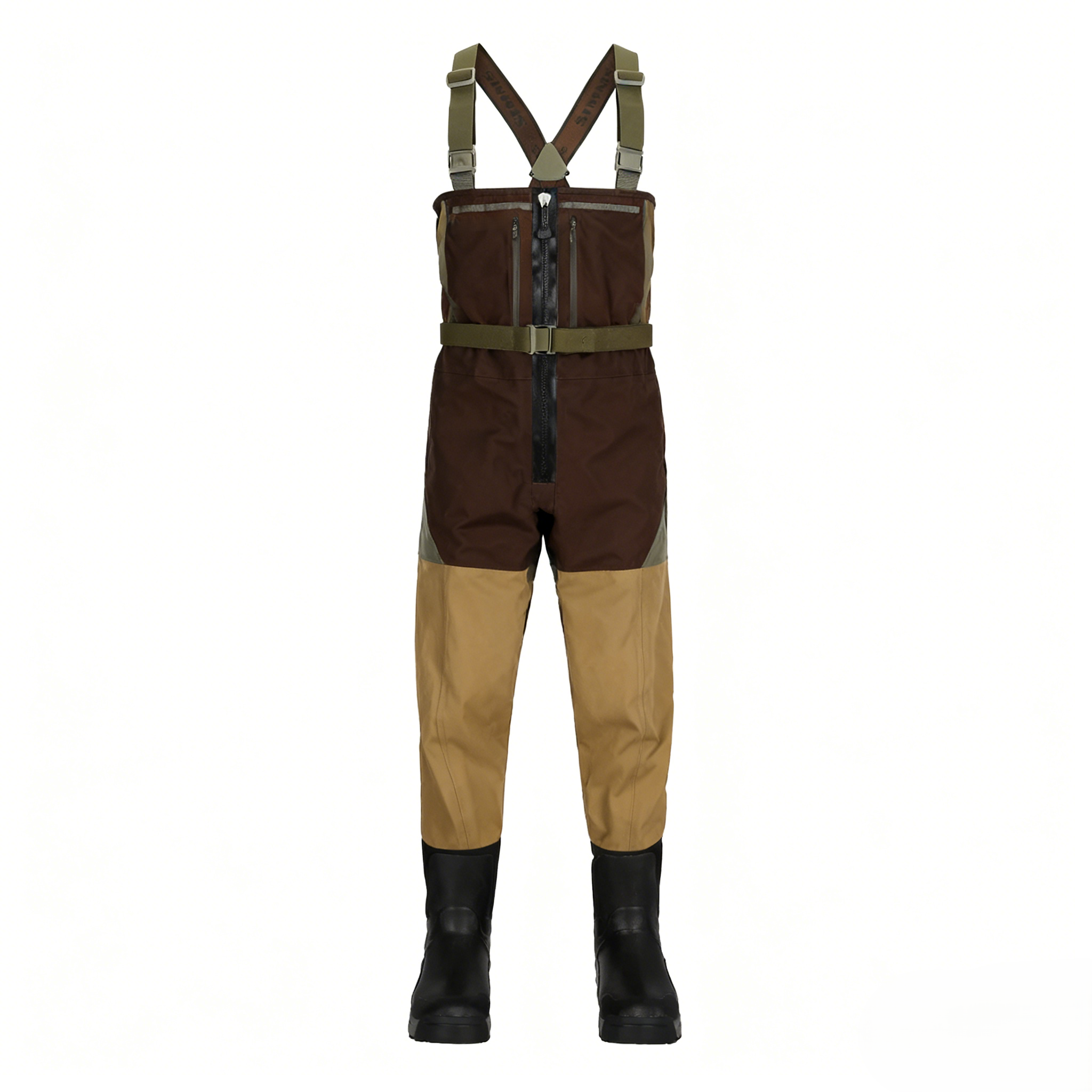
Beyond the fabric itself, the OEM process allows for the integration of custom safety features that can set a distributor's product apart from standard offerings. A distributor can choose to add specialized tool loops, D-rings for gear attachment, or even internal waterproof pockets for mobile devices—features that are often overlooked in mass-market models. More importantly, they can specify the quality of the components, such as utilizing YKK zippers or high-tensile strength buckles, which are known for their reliability in the field. Ergonomic improvements, such as articulated joints or adjustable suspender systems, can also be customized to provide a better fit for the local population's average body type. When a distributor offers a wader that fits better and lasts longer than a standard unit, they solidify their position as a premium provider. These small but significant design choices contribute to a superior user experience, which is the most effective way to reduce warranty claims and build a positive brand reputation over time.
Supply Chain Stability and Exclusive Distribution Rights
In an era of global supply chain volatility, having a direct relationship with a manufacturer through an OEM agreement provides a level of security that traditional wholesaling cannot match.
Protecting Market Share through Exclusive Designs
When a distributor invests in an OEM wader, the resulting design is typically exclusive to their company. This means that no other competitor can sell the exact same product, effectively creating a "moat" around the distributor's business. In a traditional retail model, a customer might see a product in a showroom and then search for the same model number online to find a lower price. With an exclusive OEM product, that comparison is impossible. This exclusivity is particularly valuable when bidding for large-scale industrial contracts or government tenders. The distributor can showcase a unique set of specifications that only their wader meets, making them the sole logical choice for the contract. This strategic advantage allows for more predictable sales forecasting and protects the distributor from the sudden entry of low-cost competitors who might otherwise undercut their business using the same third-party brands.
Streamlining Inventory Management and Production Cycles
Directly collaborating with a manufacturer allows distributors to align production schedules with their specific sales cycles. Instead of being at the mercy of a major brand's global stock levels, an OEM distributor can plan their orders based on local seasonal demand. This leads to more efficient inventory management, as the distributor can request "just-in-time" production runs or hold safety stock of their own branded items. Furthermore, the communication channel with an OEM partner is usually more direct, allowing for faster adjustments to the product based on customer feedback. If users report that a certain seam needs reinforcement, the distributor can implement that change in the next production batch. This agility is a massive advantage in the fast-moving world of industrial safety gear, where the ability to quickly address quality issues or market trends can mean the difference between a successful season and a warehouse full of unsold, outdated stock.
Optimizing Profitability and Long Term Business Scalability
While the initial investment in OEM development may be higher than buying off-the-shelf goods, the long-term financial benefits are substantial for a growing distribution business.
Maximizing Margins by Eliminating the Middleman
By working directly with an OEM manufacturer, a distributor removes the markup typically added by a brand-name wholesaler. Even after accounting for the costs of branding, packaging, and quality control, the cost per unit of an OEM wader is generally significantly lower than the wholesale price of a comparable name-brand product. This cost saving can be used in two ways: the distributor can lower their retail price to gain market share while still maintaining a healthy profit, or they can keep the price at market levels and enjoy a much higher margin on every sale. Over hundreds or thousands of units, these savings represent a massive increase in net profit. This capital can then be reinvested into marketing the brand or expanding the product line into other categories, such as wading boots or waterproof jackets, creating a comprehensive ecosystem of products that further ties the customer to the distributor’s brand.
Building an Asset that Enhances Company Valuation
A distribution company that owns its own brands and product designs is significantly more valuable than one that simply resells other people's products. An OEM wader line is a tangible intellectual property asset that adds to the overall valuation of the business. Should the distributor ever decide to sell their company or seek investment for expansion, having a portfolio of successful, exclusive products is a major selling point. It demonstrates that the business has a loyal customer base and a defensible position in the market. Furthermore, as the brand grows, the distributor can potentially expand their reach by wholesaling their own OEM brand to smaller retailers, effectively moving up the supply chain. This scalability allows a local or regional distributor to transform into a national or even international brand owner, leveraging their initial success with a single high-quality wader to build a multi-million dollar enterprise.
Strategic Marketing and Value Added Services
The flexibility of the OEM model extends into how the product is presented to the world, allowing for highly targeted marketing campaigns.
Creating Targeted Marketing Collateral for Niche Markets
Standard brand-name products come with generic marketing materials designed for a broad audience. An OEM distributor, however, can create specialized content that speaks directly to the needs of their specific clientele. If the distributor's primary customers are in the aquaculture sector, they can produce manuals, videos, and brochures that show the wader being used in that specific context. This relevance makes the marketing much more effective at converting leads into sales. Additionally, the distributor can customize the packaging to include helpful information, such as maintenance tips or safety warnings in the local language, which adds a professional touch that end-users appreciate. This ability to "localize" the product experience through custom marketing makes the wader feel like a bespoke solution rather than a generic piece of equipment, further justifying the customer's investment in the brand.
Facilitating After Sales Support and Warranty Confidence
Owning the product design means the distributor has an intimate knowledge of how the wader is constructed. this expertise allows them to provide superior after-sales support compared to a standard retailer. They can stock specific repair kits, replacement parts, or provide expert advice on how to patch a leak in their specific material. When a customer knows that the distributor stands behind their own brand with deep technical knowledge, it builds immense confidence. This trust is particularly important for B2B clients who rely on their gear for their livelihood. An OEM distributor can offer more flexible warranty terms because they are dealing directly with the factory, allowing them to resolve issues quickly and keep their clients happy. This high level of service, combined with a high-quality product, creates a powerful competitive advantage that is difficult for traditional resellers to replicate.
FAQ
What are the typical minimum order quantities for OEM chest waders?
Minimum Order Quantities (MOQs) for OEM projects vary depending on the manufacturer and the complexity of the customization. Generally, for a fully custom chest wader, MOQs can range from 300 to 500 units per style or color. However, some manufacturers offer "semi-custom" options where a distributor can add their logo to a pre-existing high-quality design with much lower MOQs, sometimes as low as 50 to 100 units. It is important for distributors to balance the desire for deep customization with the logistical realities of their storage capacity and sales velocity.
How long does the development process take for a custom OEM product?
The timeline for developing a custom wader usually spans between three to six months. This includes the initial design phase, material sourcing, prototype creation, and rigorous testing. Once the prototype is approved, mass production and shipping can take an additional 45 to 60 days. Distributors should plan their product launches well in advance, typically starting the OEM process at least half a year before their peak selling season to ensure that the inventory arrives in time for the market demand.
Is it possible to request specific safety certifications for OEM products?
Yes, one of the primary advantages of the OEM model is the ability to ensure the product meets specific regional or industrial safety standards. A distributor can work with the manufacturer to have the wader tested and certified for various standards, such as CE marking in Europe or ASTM standards in the United States. While these certifications may involve additional testing fees, they are essential for selling into professional or government sectors where certified Personal Protective Equipment (PPE) is a legal requirement.
How does a distributor handle quality control for an OEM wader produced overseas?
Successful OEM distributors typically implement a multi-stage quality control (QC) process. This involves specifying high standards in the initial contract, requesting "pre-production" samples for approval, and hiring third-party inspection agencies to conduct "in-line" and "final" inspections at the factory. These inspectors check for seam integrity, waterproofness (using pressure tests), and the quality of the stitching and components. By catching potential issues at the source before the goods are shipped, the distributor minimizes the risk of receiving defective inventory and protects their brand reputation.
Table of Contents
- Strengthening Brand Identity and Market Competitiveness through Customization
- Enhanced Control Over Product Specifications and Quality Standards
- Supply Chain Stability and Exclusive Distribution Rights
- Optimizing Profitability and Long Term Business Scalability
- Strategic Marketing and Value Added Services
- FAQ