
 EN
EN


Industrial Grade Fabric Selection and Structural Longevity
For distributors and retailers, the definition of durability in a wader extends beyond simple waterproofness; it encompasses the product's ability to withstand high-frequency use in demanding professional environments. In the competitive landscape of outdoor and industrial apparel, providing gear that resists punctures, abrasions, and seam failure is the most effective way to minimize return rates and maximize customer lifetime value. The highest levels of durability are currently found in multi-layer breathable laminates and heavy-duty vulcanized rubber or PVC. While consumer-grade products often focus on aesthetics, B2B-grade equipment prioritizes the denier count of the face fabric. A higher denier indicates a thicker, more tightly woven nylon or polyester shell that can survive contact with sharp rocks, barnacles, and industrial debris. For a retailer, stocking a wader with a 4-layer or 5-layer lower leg construction ensures that the most vulnerable areas of the garment are reinforced against the mechanical stresses of daily commercial operations. This robust engineering allows distributors to confidently market their inventory to demanding sectors like aquaculture, heavy civil engineering, and commercial harvesting where equipment failure is not an option.
Comparative Durability of Modern Wading Materials
Understanding the trade-offs between different material technologies is essential for any distributor looking to optimize their product catalog for different industrial applications.
Heavy Duty PVC and Rubber for Harsh Chemical Exposure
In environments where workers are exposed to oils, fuels, or corrosive cleaning agents, traditional PVC and rubber models often provide the best durability. These materials are non-porous and chemically inert, meaning they do not degrade as quickly as technical fabrics when in contact with industrial pollutants. For a distributor, these "old-school" models represent a reliable, low-maintenance option that is virtually immune to the pinhole leaks that can plague breathable membranes. The seams in high-quality PVC gear are typically high-frequency welded, creating a bond that is stronger than the material itself. This makes them ideal for rental programs or high-turnover work crews where the gear is treated roughly and stored in less-than-ideal conditions. While they lack the comfort of breathable alternatives, their sheer physical toughness makes them a staple for heavy-duty utility work where the primary goal is total isolation from a hazardous environment.
Multi Layer Breathable Technology and Ripstop Reinforcements
In the premium segment, the most durable breathable wader models utilize advanced membranes protected by a high-tenet outer shell. Professional-grade breathable gear often incorporates ripstop weaving patterns, which prevent a small snag or puncture from spreading into a larger tear. This is a critical selling point for retailers, as it allows for easier field repairs and extends the total service life of the garment. Furthermore, the integration of Cordura or similar high-abrasion-resistant fabrics in the knees and seat areas provides an extra layer of defense for workers who frequently kneel or sit on rough surfaces. For the distributor, the advantage of these high-tech materials lies in their ability to offer "durable comfort." By providing a wader that is both tough enough for the job and comfortable enough for a 12-hour shift, retailers can justify a higher price point and appeal to professional clients who view their gear as a long-term investment in productivity.
Critical Construction Details that Prevent Seam Failure
The point where the fabric meets is often where a wader is most likely to fail. Distributors must look closely at the joining technologies used by manufacturers to ensure they are providing the most reliable product possible.
Sonic Welding and Double Taping Techniques
Traditional stitched seams create thousands of tiny holes in the fabric, each of which must be meticulously taped to prevent leaks. In contrast, modern sonic welding technology uses high-frequency sound waves to fuse the fabric layers together without the use of needles. This creates a flat, seamless bond that eliminates the bulk and potential friction points of traditional seams. For a retailer, promoting "stitchless" technology is a powerful way to demonstrate a commitment to durability. Even in stitched models, the quality of the tape used on the interior is paramount. Professional-grade equipment uses wide, heavy-duty waterproof tape applied under precise temperature and pressure controls. This ensures that the tape does not delaminate or peel away after repeated folding and unfolding. A wader with reinforced seam intersections—where multiple pieces of fabric meet—is significantly less likely to develop the "stress leaks" that are common in lower-quality inventory.
Integrated Boot Attachment and Stress Distribution
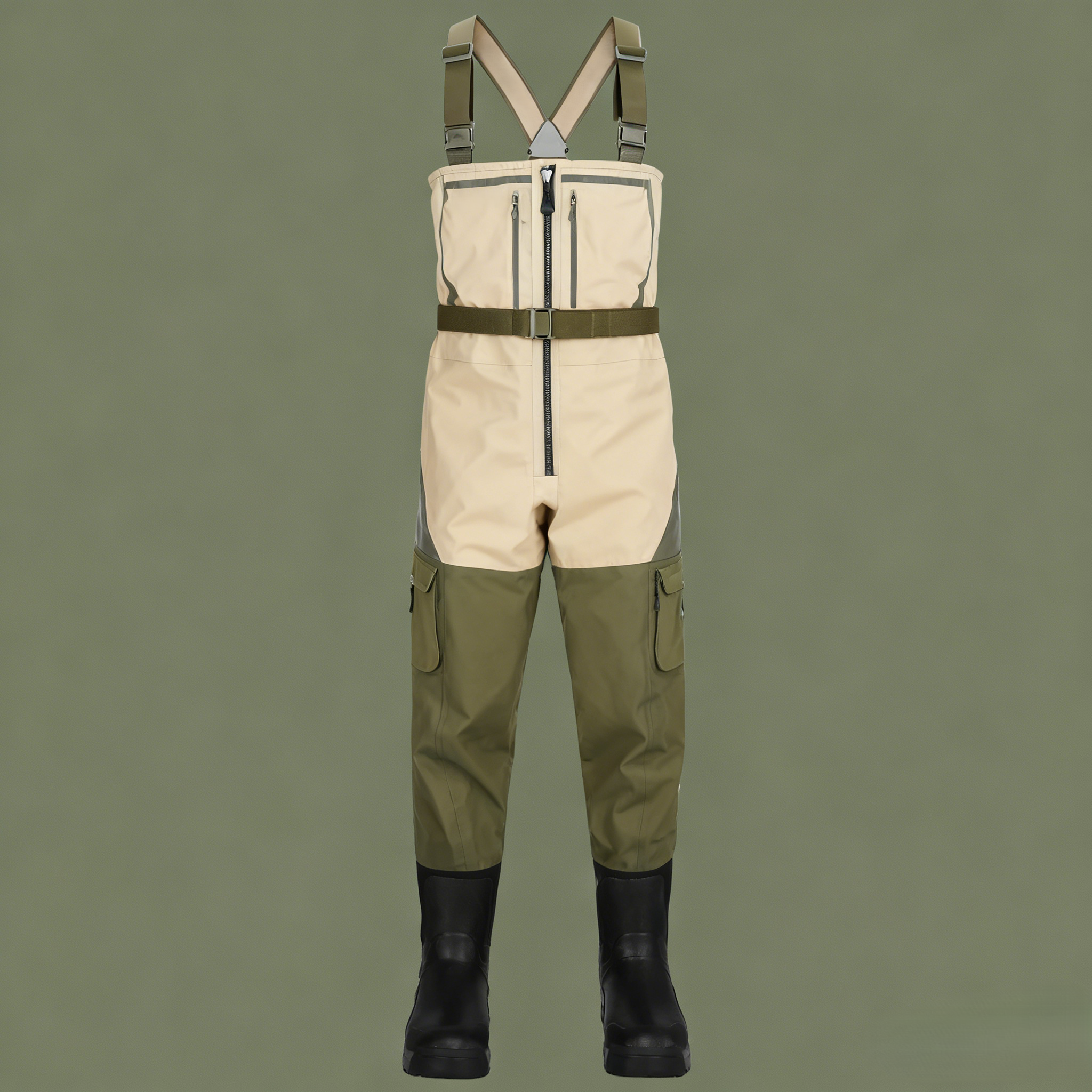
For bootfoot models, the junction between the soft fabric of the leg and the rigid material of the boot is a frequent failure point. The best durability is achieved through a vulcanized or multi-stage heat-sealing process that creates a seamless transition. Distributors should look for models where the boot attachment is reinforced with additional layers of tape or rubber "bumpers" that protect the seam from external impacts. Additionally, the design of the suspender and belt system plays a role in overall durability. By distributing the weight of the wader evenly across the shoulders and waist, these systems reduce the "pull" on the crotch and ankle seams when the wearer is moving through deep mud or climbing over obstacles. A wader that manages internal stress effectively will always outlast one that relies solely on the strength of its fabric, providing a more reliable solution for commercial clients who put their gear through rigorous daily use.
Longevity Factors for B2B Inventory Management
For a distributor, the durability of a product also encompasses how well it holds up during storage and transport before it even reaches the end-user.
Resistance to Environmental Degradation in Storage
Inventory that sits in a warehouse for extended periods can sometimes suffer from "shelf-wear," where materials become brittle or adhesives fail due to temperature fluctuations or ozone exposure. High-quality industrial wader models are often treated with anti-aging agents and UV inhibitors that maintain the flexibility of the rubber and the integrity of the waterproof membranes over time. This is a major benefit for distributors who need to maintain a deep stock of various sizes to meet sudden contract demands. By investing in gear that is built to last both in and out of the water, businesses can reduce the risk of discovering defective stock during a critical deployment. Furthermore, the use of high-quality, corrosion-resistant hardware—such as plastic or high-grade stainless steel buckles—ensures that the functional components of the garment remain operational even after months of storage in humid coastal environments.
Ease of Repair and Maintenance for Fleet Use
No wader is truly "bulletproof," so the ability to perform quick, effective repairs is a key component of overall durability for large-scale users. Distributors who offer "repairable" gear provide a significant value-added service to their clients. Breathable fabrics that are compatible with standard waterproof adhesives and patches allow a commercial fleet to stay in operation without having to replace an entire unit for a minor puncture. Some manufacturers even provide comprehensive repair kits with every bulk order, a move that retailers can use to distinguish themselves from competitors. A product that is designed to be maintained rather than disposed of aligns with the sustainability goals of many modern corporations and government agencies. By highlighting the long-term serviceability of their wader stock, distributors can build stronger, more consultative relationships with their B2B clients, moving beyond a simple transactional model to become a true partner in their operational success.
Strategic Importance of Quality Control in Wholesale
Reliability at scale is the hallmark of a successful distribution business. Ensuring that every unit in a thousand-piece order meets the same high standards is the final piece of the durability puzzle.
Factory Testing Protocols and Waterproof Certification
Distributors should prioritize manufacturers who implement 100% waterproof testing for every single wader that leaves the assembly line. This usually involves inflating the garment with air and submerging it in a water tank to check for bubbles, or using a "static head" test to measure the fabric's resistance to water pressure over time. Providing these test results or certifications to B2B clients builds immediate trust and justifies the investment in higher-quality gear. For a retailer, the peace of mind that comes from knowing their stock has been individually verified for integrity is invaluable. It reduces the administrative burden of handling returns and the reputational risk associated with selling faulty equipment. In the world of commercial fishing and industrial maintenance, a distributor's reputation is built on the reliability of the gear they provide, making rigorous quality control a fundamental pillar of their business strategy.
Feedback Loops and Iterative Product Improvement
The most durable products are often the result of years of field testing and incremental improvements. Distributors who maintain close contact with their end-users can provide valuable feedback to manufacturers, leading to reinforced designs in future production runs. For instance, if a specific group of aquaculture workers finds that a certain seam always wears out first, the distributor can work with the factory to add an extra layer of reinforcement in that specific area for the next order. This iterative process results in a "custom-hardened" wader that is perfectly adapted to the challenges of the local market. By participating in this development cycle, distributors ensure they are always offering the most durable and relevant solutions to their customers, staying one step ahead of competitors who only sell generic, unoptimized products. This commitment to continuous improvement is what ultimately defines a market-leading distributor in the professional protective gear industry.
FAQ
Which is more durable for rocky environments: felt or rubber soles?
In terms of the sole's physical wear, rubber is generally more durable and abrasion-resistant, especially when walking on dry land, gravel paths, or concrete. However, "durability" in a safety context also refers to the traction provided. In extremely slippery, algae-covered rocky riverbeds, felt soles provide superior grip, which prevents the wearer from falling and potentially damaging the wader fabric itself. For distributors, the choice often depends on local regulations (as felt is banned in some areas to prevent the spread of invasive species) and the specific terrain the workers will encounter most frequently.
How does the thickness of neoprene affect its lifespan in commercial use?
Thicker neoprene (such as 5mm or 7mm) generally offers more physical protection against punctures and is more resistant to the compression that occurs at depth, which can lead to leaks over time. However, thicker material is also less flexible, which can put more stress on the seams during active movement. For most B2B applications, a 3.5mm to 5mm neoprene wader provides the best balance of insulation, physical toughness, and flexibility, ensuring a long service life without compromising the worker's mobility.
Can breathable waders be used for heavy industrial cleaning?
Yes, provided the wader is constructed from a high-denier face fabric (usually 500D or higher) and the outer layer has a durable water repellent (DWR) coating. Many industrial-grade breathable models are specifically designed to resist the high-pressure water and chemicals used in industrial cleaning. The benefit for the worker is a massive reduction in heat stress, which is a major safety concern in non-breathable gear. Distributors should ensure that the specific chemicals being used are compatible with the wader's membrane and face fabric before recommending them for specialized cleaning tasks.
What is the best way for a retailer to demonstrate wader durability to a customer?
The most effective way is to provide a "cut-away" sample of the fabric layers, allowing the customer to see and feel the thickness of the reinforcement and the quality of the internal seam taping. Retailers can also point to specific technical features like reinforced knee pads, high-quality buckles, and heavy-duty boot attachments. Providing case studies or testimonials from local commercial clients who have used the wader in similar conditions is also a powerful tool for building trust and proving the long-term value of the product.